

Emergency Roof Repair
Water coming through the ceiling, or a storm just took part of your roof? We stop the water first, then tell you straight what the permanent fix is. Call 908-880-2500.
Stop the Water First. Fix the Roof Properly After.
A leaking roof is two problems. The first is the water getting into your house right now. The second is whatever let it in. We deal with them in that order, and we do not let the urgency of the first one push you into paying for the wrong answer to the second.
- Active leaks stopped with a temporary dry-in
- Storm and wind damage
- Photos of the damage before anything is covered
- A written scope for the permanent repair
- An honest call on what can wait
- Licensed and insured across New Jersey
The first hour of an active leak
Call us, then work through these while you wait. None of them involve a ladder.
- Move what is under it. Furniture, electronics, rugs, boxes, anything that soaks up water or should not get wet. If the water is coming down near a light fixture or an outlet, keep everyone away from that spot.
- Catch the water. Buckets, pots, a storage bin, with towels underneath to stop the splash. If a ceiling is bulging or sagging with water, keep people out of the room below it.
- Photograph everything before anything gets covered. The ceiling, the wall, the floor, the wet belongings, and the outside of the house if you can see damage from the ground. Once a roof is tarped, the evidence your insurer wants to see is under it. Take the photos first.
- Do not go on the roof in the weather. A wet roof in wind or rain is how a leak becomes a fall. Nothing up there is worth it. Stopping the water from outside is our job, and we will do it when it can be done safely.
What we do when we get there
First, we assess. We look at the roof, and from the attic or the ceiling where we can, and find where the water is actually getting in. That is not always directly above the stain. Water travels along decking and rafters before it drips, so the hole can be several feet from the puddle.
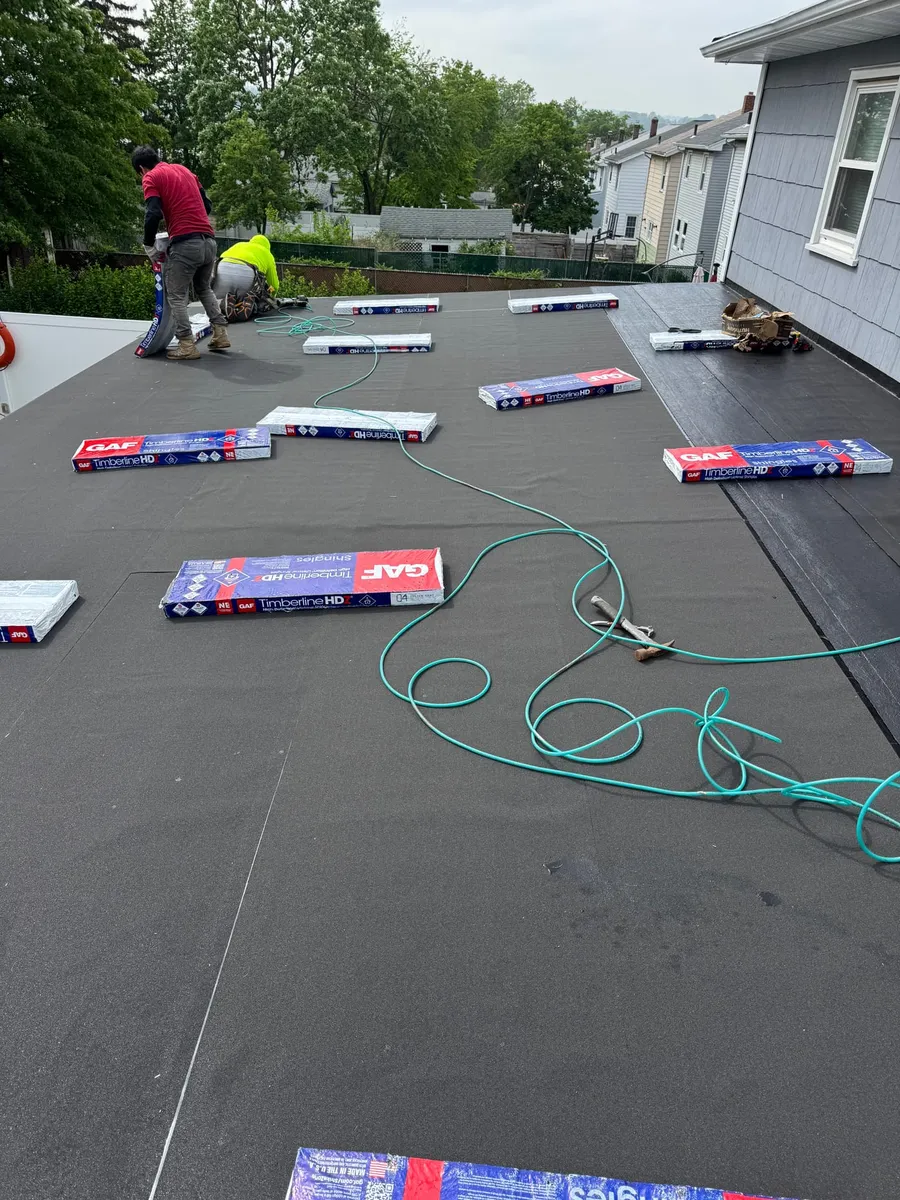
Then we dry it in. That is a temporary cover over the damaged section, a tarp or membrane fastened so that it holds against wind and sheds water off the roof rather than into it. The goal is simple: no more water inside the house tonight.
Then you get a written scope. Once the weather allows us to see the whole roof, we write down what failed, what the permanent repair is, and whether it is a repair or the start of a conversation about replacement. You get that in writing, so you can show it to your insurer, compare it with anyone else you call, and decide without someone standing on your lawn waiting for an answer.
What is an emergency, and what can wait
Call right away if water is actively coming into the house, if a ceiling is stained and spreading or starting to sag, if a section of shingles or decking is gone and the roof is open, or if a tree or large limb has come down on the roof. If a tree has brought down power lines, or you think the structure has been damaged, call 911 or the utility before you call us.
Some things look alarming but can wait until the weather clears: a few shingles missing with no water coming in, shingle granules collecting in the gutters, an old ceiling stain that is dry to the touch, or a dented gutter. Call us about them, and we will look when it is dry and safe. We will not treat them as an emergency, and neither should anyone else.
After a storm
Wind and fallen limbs do the kind of damage that turns into a leak overnight, and a storm claim has its own order of operations. If you are dealing with storm damage and an insurance claim, read what to do first after storm damage to your roof in New Jersey before you sign anything. It covers documenting the damage, calling your insurer before a contractor, finding out which deductible applies, and what to do about the contractor who knocks on your door the day after. Take their card, and check them before you let them on your roof.
Where we work
For emergencies, we cover northern and central New Jersey. Stopping a leak only helps if we can get to you while it still matters, so we keep emergency call-outs closer to home. For planned roofing, siding and exterior work, we cover the whole state, from Bergen and Sussex down to Cape May.
If your roof is leaking now, call 908-880-2500. If it is not urgent, send us a message and we will set up a time to look at it properly.
Water Coming In? Call Us First.
Call 908-880-2500 and tell us what you are seeing. If it is an emergency, we will say so. If it can wait for dry weather, we will say that too.
Send Us a Message