Fiber Cement or Vinyl? Choosing Siding for a New Jersey Home
Both are good products. They fail differently, they cost differently, and one of them fits your house better than the other.
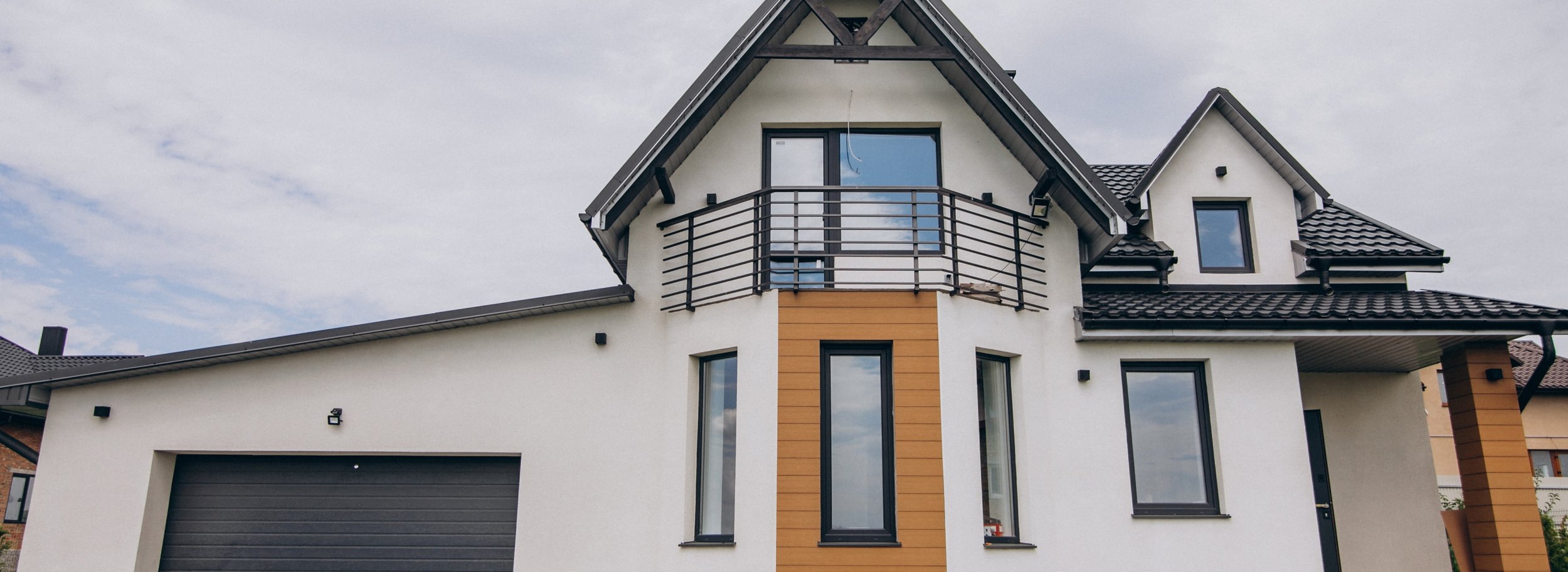
This is not an article about how vinyl is bad. We install both, and there are New Jersey houses where vinyl is the right answer and fiber cement would be money spent for no return. What follows is the difference as it actually shows up on a job, so you can pick with your eyes open.
Start with the climate, because it decides a lot
New Jersey siding lives through a freeze and thaw cycle for months a year. Moisture gets into or behind a material, freezes overnight, expands, thaws in the afternoon, and does it again. Add summer humidity, driving rain off the Atlantic, and a temperature swing of well over a hundred degrees between January and July, and you have a set of conditions that finds the weakness in any cladding.
Manufacturers take this seriously enough to build for it. James Hardie sells climate specific product lines rather than one national product, precisely because what a house needs in New Jersey is not what it needs in Arizona.
What fiber cement actually is
Cement, sand and cellulose fibre, pressed into boards and cured. It is a mineral product, and that gives it properties vinyl cannot have.
James Hardie states its fiber cement products are noncombustible and carry a Class A fire rating when tested to ASTM E84, and that the material will not ignite when exposed to direct flame nor contribute fuel to a fire. The company also states the boards are engineered to resist water and humidity and to stand up to rain, sleet and snow and to freezing temperatures, and that the material holds little appeal for woodpeckers, termites and other wood boring pests.
On site, it behaves like a rigid board. It is heavy, it has to be cut with the right blade and dust control, it is fastened tight to the wall, and it holds a crisp edge and a real shadow line. It takes and holds paint, and factory finished colour is available.
What vinyl actually is
Extruded PVC panels that hang on the wall rather than being fastened tight to it. That is the key detail people miss. Vinyl is nailed loosely on purpose so that it can slide as it expands and contracts, and a vinyl job nailed tight will buckle in the first hot week.
It does not rot, it never needs painting, it is the cheapest of the common claddings to buy and to install, and a crew can put a lot of it up in a day. Panel thickness and quality vary enormously, and that variation is most of the difference between vinyl that looks good for twenty years and vinyl that looks cheap in three.
Where they genuinely differ
- Fire. Fiber cement is noncombustible. Vinyl is a plastic, and it will soften, distort and melt under sustained radiant heat, including from a neighbouring structure fire or a grill placed too close to the wall
- Impact. Fiber cement takes a hit from a ladder or a stone from a mower. Vinyl can crack, and it is more brittle when it is very cold, which is exactly when a New Jersey winter is throwing things at it
- Appearance. Fiber cement is thicker, so it casts a deeper shadow at each course and reads more like real wood siding from the street. This is the difference most homeowners can see immediately and struggle to name
- Colour. Vinyl colour goes all the way through and never needs painting, but it also cannot be changed. Fiber cement can be repainted, which means you are not locked into a colour decision for thirty years
- Movement. Vinyl expands and contracts visibly with temperature and must be installed loose to allow it. Fiber cement is dimensionally stable and is fastened tight
- Weight and labour. Fiber cement is far heavier and slower to install, which is most of why it costs more
- Repair. A damaged vinyl panel can be unzipped and swapped in minutes. A damaged fiber cement board is a more involved repair, though it is damaged far less often
Which suits which house
Vinyl makes sense on a rental or an investment property, on a simple elevation without much trim detail, where the budget is genuinely tight, or where the goal is a clean refresh rather than a long term upgrade. It is not a compromise in those cases, it is the right tool.
Fiber cement earns its cost on a house you intend to keep, on historic or detailed elevations where the profile and shadow line matter, on exposed sites that take weather directly, on homes close enough to a neighbouring structure that fire performance is worth something, and anywhere the siding is a meaningful part of what the house is worth.
The mistake people make with both
Arguing about the cladding and ignoring what goes behind it. Siding is not waterproof and is not supposed to be. It is the outer layer of a system, and the layers underneath do the real work: the house wrap, the flashing at every window head and sill, the kick out flashing where a roof meets a wall, and the detailing that gives water a way back out.
We have opened up walls under expensive siding and found rot, because the flashing was wrong and the best cladding in the world cannot fix bad water management. We have also seen thirty year old vinyl over a properly detailed wall with nothing wrong behind it at all.
What we install
We do both. Most of our recent work has been James Hardie lap, shake and board and batten, including multi texture elevations that mix them, which is a fair reflection of what North Jersey homeowners are choosing right now. We also install vinyl properly, which means loose nailed, correctly flashed and with the right starter and trim details.
If you want a straight recommendation for your specific house rather than a general one, we will come and look at it. Call 908-880-2500 and we will tell you what we would do if it were ours.
Sources
More from the Journal
- Ice Dams: Why They Happen, and Why the Fix Is Not on the Roof
- Can You Replace a Roof in Winter in New Jersey?
- Storm Damage and Your Roof: What to Do First in New Jersey
- What Separates a Good Exterior Job From a Cheap One
- Gutters That Actually Work in North Jersey
- When to Replace Your Roof, and When to Repair It
- How to Check a New Jersey Contractor Before You Sign
- What a Roof Replacement Actually Costs in New Jersey
Ready to Upgrade Your Home's Exterior?
Call 908-880-2500 for a free, no-pressure estimate on your next roofing, siding, or exterior project. Based in Hillside, serving homeowners throughout New Jersey.
Get A Free Quote